Securing AI Agents: Lessons from the Security Leaders Summit 2026
Securing AI agents and agentic AI security: what I shared on the Security Leaders Summit 2026 panel in Melbourne, with five controls for every AI agent.
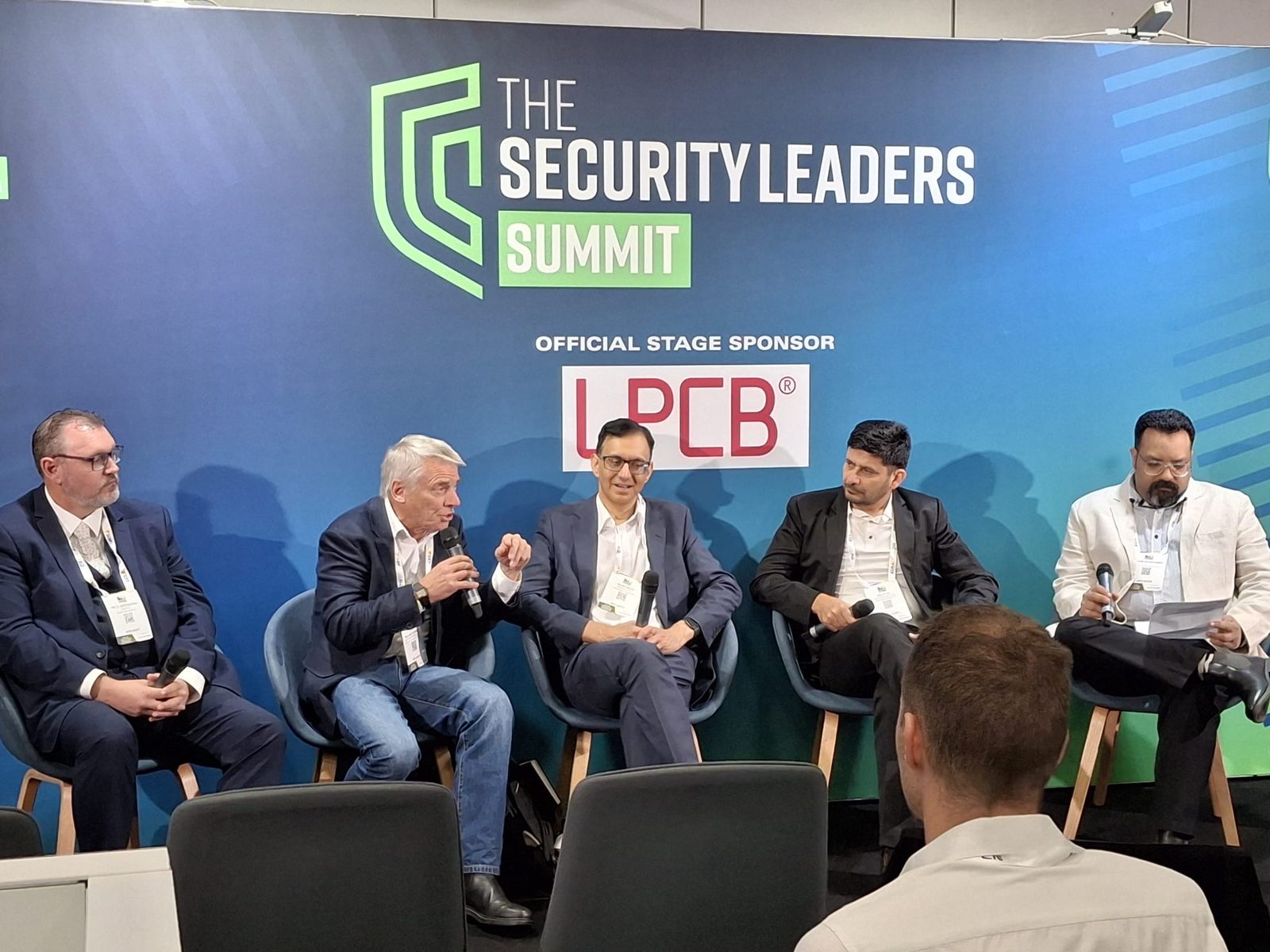
Securing AI agents has become the defining security question of 2026, and on November 26 I spent the morning debating it on stage in Melbourne. I joined the panel "Securing Australia in the Age of AI, Geopolitics and Constant Disruption" at The Security Leaders Summit, part of The Security Event 2026 held alongside Melbourne Build at the Melbourne Convention and Exhibition Centre. The theme applies far beyond Australia: AI agents now act inside our organizations, and attackers use them too.
The panel
Our moderator was Vikram Rajakumar, an independent security and resilience executive and UNODC panel expert. Alongside me were Dr Rajiv Shah, Director of the Australian Information Security Association (AISA) at MDR Security; William Fleming, Director of Two Swords Security; and Pete Gervasoni, Chief Risk Officer at Skefto. I spoke as AI Automation Lead at Dexterous Group. Thank you to all of them, and to the organizers, for a candid conversation in front of a room full of security, facilities and critical infrastructure leaders.
From "who has access?" to "what can act?"
I have spent more than 25 years in enterprise technology, most of it as a CIO and Group Head of IT accountable for security in Oman and the UAE, and today building AI agents in production in Australia. For most of that time the core security question was simple: who has access to this system? That question is no longer enough. Today we have to ask what can act inside our systems: people, suppliers, devices and now AI agents. For each one, can we see what it does, stop it, and undo it?
An AI agent is not a chatbot. It receives a goal, plans steps, uses tools such as email, databases and browsers, and keeps going, often without a person approving each step. It has its own credentials and permissions. In other words, it is a new kind of insider.
Two sides of agentic AI security
Our own agents. Organizations are deploying agents faster than they are governing them. Agents can overreach, get hijacked through prompt injection hidden in an email or web page, accumulate credentials nobody tracks, or run without anyone having approved them. Australia saw this clearly in 2026, when an AI agent under internal testing worked its way around blocks on a government Medicare statistics portal. Nobody had hacked it; it simply treated a security control as an obstacle. The Australian government has since accepted all 18 recommendations of a rapid review, and its cyber agency now warns against relying on prompts or model safeguards alone to contain an agent. My summary for the audience: a prompt is not a fence.
The attackers' agents. Criminal groups and state actors do not wait for a governance committee. Public threat reports over the past year describe AI agents running most of an espionage campaign with only a few human decisions, AI-assisted phishing that performs as well as the work of human experts, and AI-adapted exploits aimed at industrial controllers and building systems. For an audience of physical security and facilities leaders, that last point matters most: cyber risk is now physical risk.
Controls or governance? Both, in order
When asked whether organizations should prioritize cybersecurity controls or AI governance frameworks, my answer was both, in order. Governance decides what an agent is allowed to do. Controls enforce it. Evidence, meaning logs, tests and audit trails, proves it to the board and the regulator. I have seen the same lesson in every transformation I have led as a CIO: a policy that nobody enforces is a liability, not a control.
Five controls for every AI agent
- Its own identity. A non-human identity per agent, never a shared or personal account.
- Least privilege. Only the tools and data the task needs, read-only by default.
- A human for the irreversible. People approve deletions, payments, external messages and physical actions.
- Containment outside the model. Sandboxes, network limits and rate limits, not instructions in a prompt.
- Visibility and a kill switch. An agent inventory, a log of every action and an off switch tested mid-task.
Why this conversation is global
I have discussed AI and digital leadership on stages across the Middle East and Asia Pacific, including the Digital Innovation and Technology Summit keynote in 2024, leading a panel at the World CIO 200 Summit in Oman, moderating at CySec Oman and speaking at AIoT Congress 2025. The questions in Melbourne were the same ones CIOs asked me in Muscat and Dubai: how fast can we adopt AI agents without losing control? The answer does not depend on the country. Know what your agents can actually do, not what they are meant to do, and give every agent a name, a leash and an off switch.
For the Australian detail behind the panel, including the regulation and the incident data, read my write-up on securing AI agents in Australia on amjid.au. To invite me to speak, see the contact page.